

Provisional PFAS-NTN Subnetwork (PFN)
Introduction
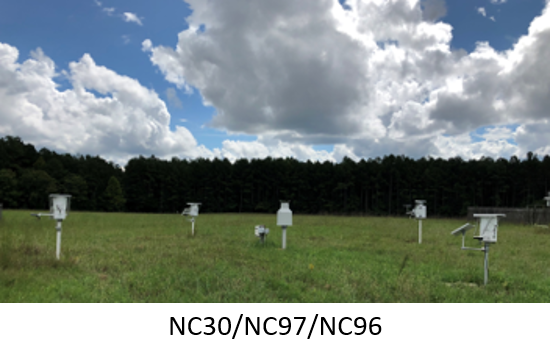
The PFAS-NTN Subnetwork, (PFN) was established as a provisional subnetwork on January 1, 2024 after several years of method development and long-term validation at a suite of existing NTN sites. The PFN will operate as a provisional network until April 2026 while the NADP finalizes the QA documentation and SOPs. NADP finalizes the QA documentation and SOPs. Once final documentation has been approved, all sites in the provisional subnetwork transition to an official NADP subnetwork and final valid data will be available online. The PFAS-NTN Subnetwork will provide weekly concentrations and deposition fluxes of more than 30 per- and polyfluorinated (PFAS) compounds in wet-deposition (precipitation).
There is growing concern that PFAS contamination in surface/ground waters, ambient/indoor air, soils and vegetation causes negative health impacts to humans, animals and ecosystems through a myriad of different exposure pathways. The NADP PFAS pilot provides key data to evaluate the atmospheric transport and transformation pathways and fate of a large suite of PFAS compounds. PFAS in wet-deposition (precipitation) can lead to contamination of surface and drinking water sources, soil and vegetation, and in certain environments atmospheric deposition represents the largest source of PFAS to those ecosystems. Leveraging the existing NTN network, with more than 230 wet-deposition monitoring sites across North America, allows for local, regional and national comparisons of PFAS concentrations and depositional fluxes.
Joining the PFN Subnetwork
PFAS measurements can be added to existing NTN site operations, or a new NTN site can be established. We currently do not plan to offer PFAS measurements outside of the NADP/NTN network.
There are minimal changes to the routine NTN field procedures once a site joins the PFAS-NTN subnetwork. The site operator will be asked to replace the collector lid with an NADP-supplied PFAS-free liner. During the weekly sample changeout the operator will be asked to wear vinyl gloves and don a Tyvek jacket (again supplied by NADP) to minimize potential contamination of the precipitation sample. The operator will ship the NTN sample back to the NADP Analytical Laboratory (NAL). Semi-annually, the operator will be asked to process field and trip blanks, and field spikes for quality control.
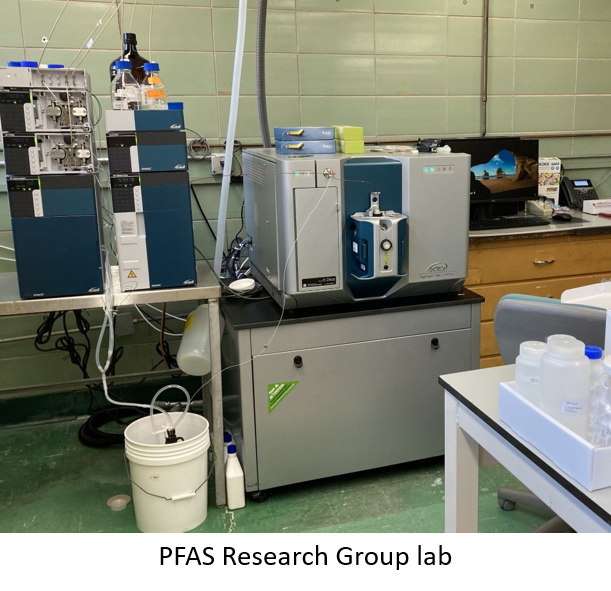
Upon receipt of the NTN sample at the NADP laboratory, a sub-sample (100 mL) is taken for measurement of the routine NTN analytes in the NAL, and excess volume is transferred to the PFAS laboratory. PFAS in the precipitation samples are quantified using isotope-dilution liquid chromatography tandem mass spectrometry (ID-LC-MS/MS). An automated solid-phase extraction protocol (WAX-SPE) is performed prior to quantification to isolate and pre-concentrate the 30+ PFAS compounds.
Preliminary PFAS concentration data will be sent to the site sponsor and site supervisor for review after all laboratory QA/QC checks are complete. Final PFAS concentration and deposition data will be posted publicly to the NADP website 180 days after each calendar quarter.
The current cost for adding the PFAS analysis to an existing NTN site is $22,500 per year (which includes the quarterly QC samples). During the transition phase of the sub-network (2024-25) we will work to identify further efficiencies and the costs for operating as a network will be re-evaluated.
CONTACT
Sarah Benish, NADP Coordinator
Email: sebenish@wisc.edu
Tel. 608-263-9162
Operator Support
The PFAS field protocols build directly on standard NTN operations and effective PFAS measurements depend critically on good NTN sample collection practice. The PFAS-specific protocols listed below build incrementally on NTN collection practice. Operator support is available to help answer questions about sampling, equipment, shipping, and general site questions. Call the 1-800-952-7353 toll free number or send an email to the network email addresses.
Standard Operating Procedures (SOPs)
- PFAS-NTN Bag Sampling Preparation Procedure
- PFAS-NTN Bag Sampling Changeout Procedure
- PFAS-NTN Bag Sampling Decanting Procedure
Weekly
- NADP-NTN PFAS Blanking and Spiking Procedures
- PFAS Semi-annual QC Chain of Custody Form
- PFAS-NTN Bag Folding Procedure
Semi-annual
Equipment Support
Method Development and Evaluation Period
Since 2018 the WSLH in partnership with Federal and State Agencies has been evaluating and refining methods for measuring more than 30 PFAS compounds in wet-deposition samples collected at existing NTN sites. By expanding the suite of measurements at NTN sites beyond the routine NTN analytes, NADP has the potential to increase overall participation in the NTN program. The potential growth of the NTN will benefit the program by expanding site coverage, welcoming new network partners, and addressing data gaps in emerging contaminants of concern in rural, urban, and overburdened communities.
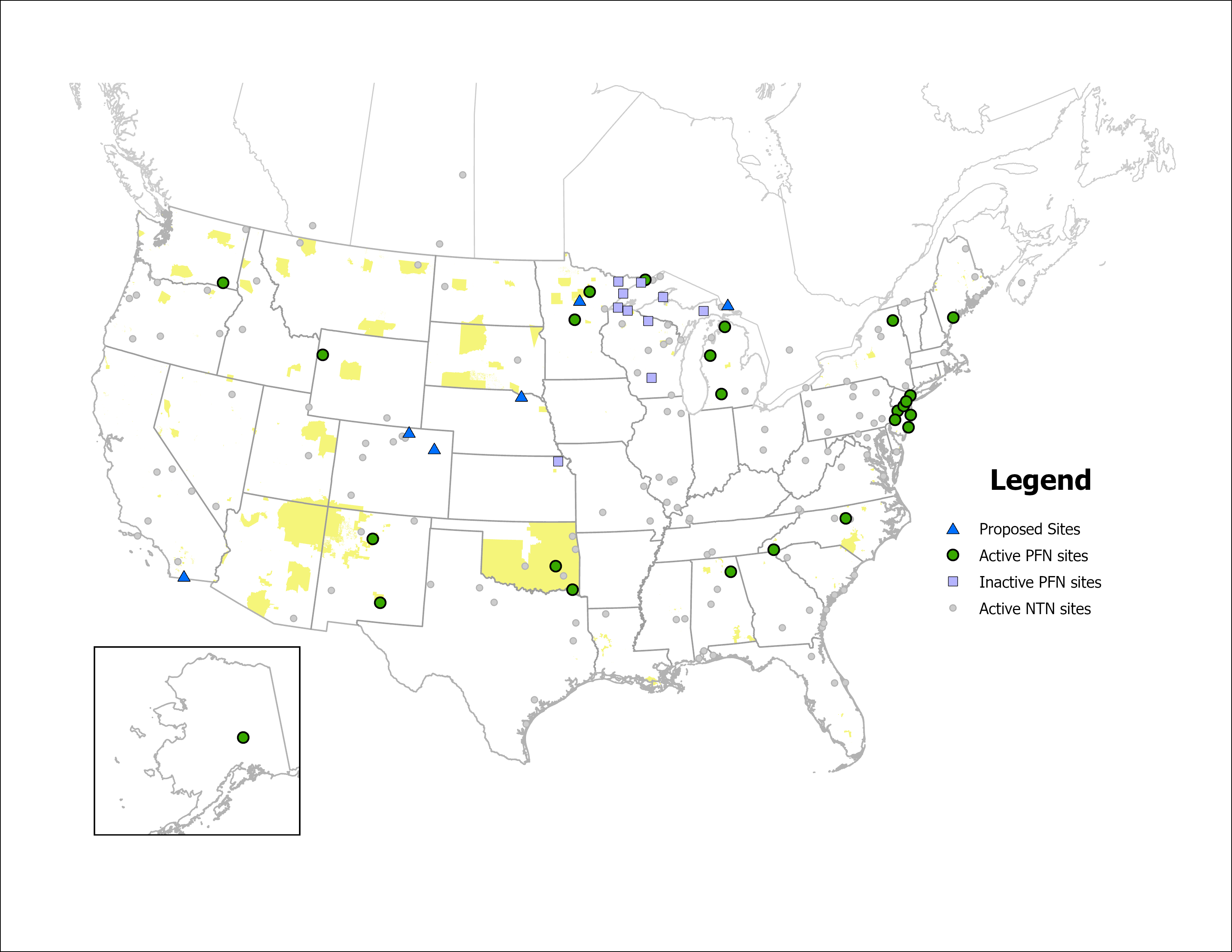
- 2020 – 2021: Precision has been evaluated at co-located sites (NC30, NC96, NC97) – typically RSD <10%
- Over 200 QA samples (field and trip blanks, field analyte spikes) confirm exceptional method performance
- Bag sampling has been tested in both laboratory and field trials and shows no contamination or PFAS sorption issues
- The methanol rinse can now be performed in the laboratory, if required
- The 10-site trial network supported by EPA/ORD has resulted in nearly 22,000 observations, the largest database of PFAS levels in precipitation
- External data quality audits completed for 2020-2022 and in progress for 2023-2024
Establishing a New PFAS Wet Deposition Subnetwork
To establish a new network (or subnetwork), network advocates complete a 12-point plan that describes the initiative, current capabilities and data collected, and impacts to the program including staff and budget.
The 12-point plan for the PFN provides a complete description of the methods and studies that have been conducted by the WSLH prior to 2025. The PO and WSLH have developed procedures that require minimal disruption to the standard NTN field operations which has made it attractive for existing sites to join the PFN subnetwork.
The 12-point plan was presented to the committees during the Fall 2023 Business Meeting. The Executive Committee approved the motion to establish a provisional subnetwork for 1-year. The provisional status allowed the PFAS laboratory and the NADP PO to further develop and document procedures for efficient generation and reporting of PFAS concentration data from the laboratory and integrate the PFAS concentration data into an NADP database for joining with precipitation amounts, and ultimately reporting concentrations and fluxes on the NADP website.
During the provisional network period, advocates continued to refine the 12-point and promoted the subnetwork through forums with Tribes, Federal, State, and local agencies to expand the provisional subnetwork. Since 2024 the subnetwork has added more than 15 sites.
At the Fall 2024 Business Meeting, the advocates presented results and updates to the established 12-point plan. A motion was passed to approve another year of the provisional subnetwork to continue to refine the documentation and procedures. During the 2025 Fall Business meeting, the Executive Committee determined that after the final QA documents are approved the provisional network would be converted to an official subnetwork under NADP starting in April 2026.
Publications
- Pronschinske M., Corsi S., Elliott S., Shafer M., Hannon K., Gruber K., and Remucal C.K., 2025. Evaluating PFAS Prevalence and Potential for Biological Effects in Lake Superior Tributaries. Environmental Toxicology & Chemistry. 44, 6, 1723–1741. https://doi.org/10.1093/etojnl/vgaf073
- Pfotenhauer, D., Sellers, E., Olson, M., Praedel, K., & Shafer, M., 2022. PFAS concentrations and deposition in precipitation: An intensive 5-month study at National Atmospheric Deposition Program–National trends sites (NADP-NTN) across Wisconsin, USA. Atmospheric Environment 291: 119368. https://doi.org/10.1016/j.atmosenv.2022.119368